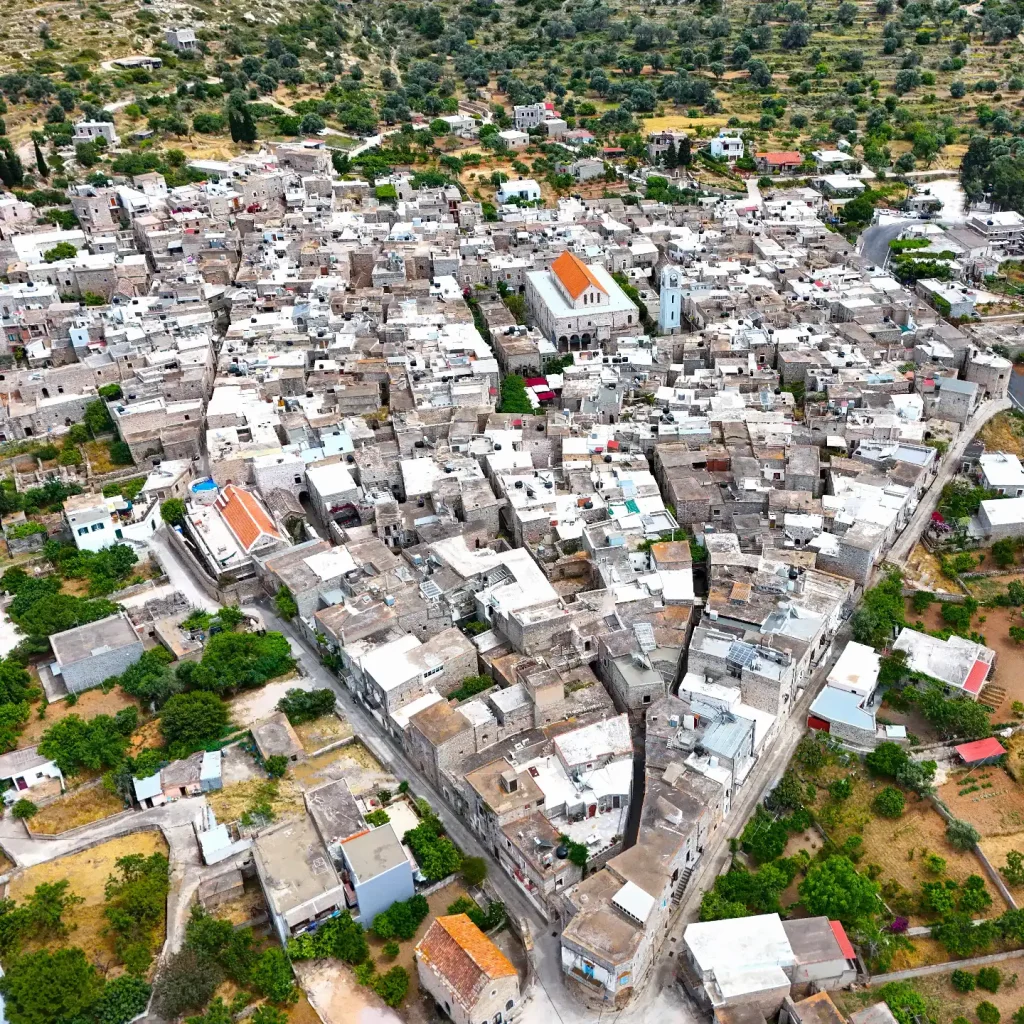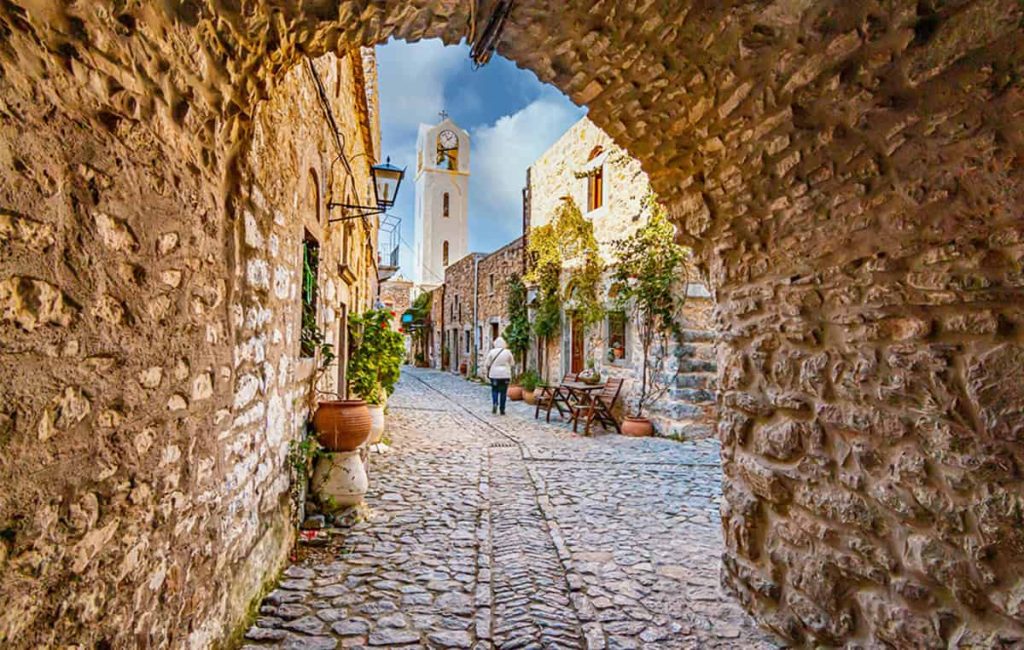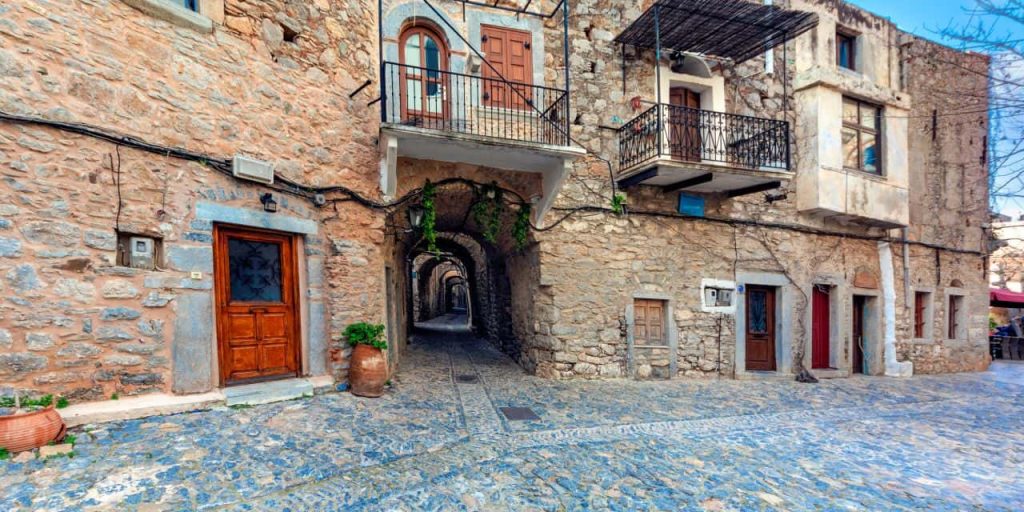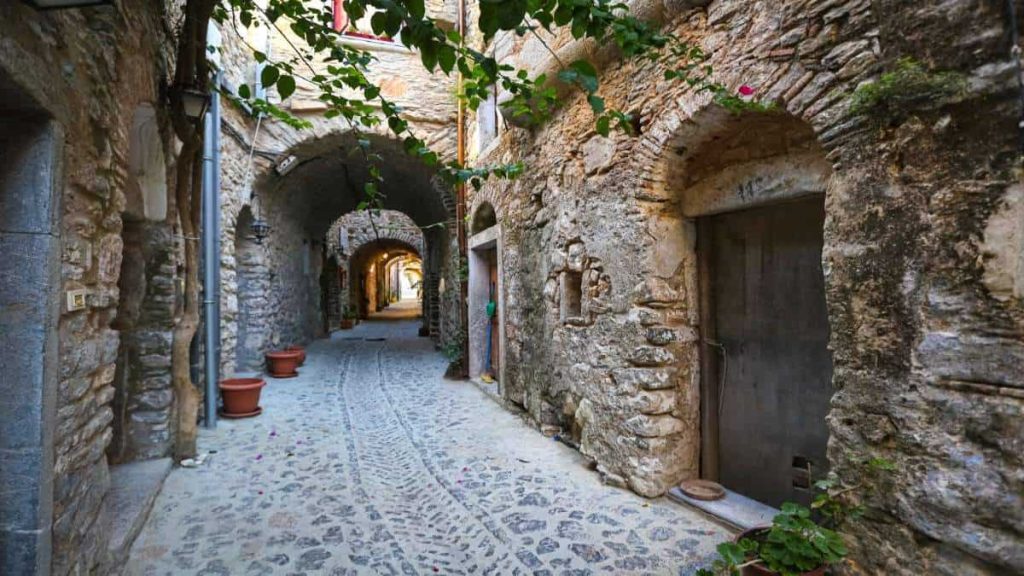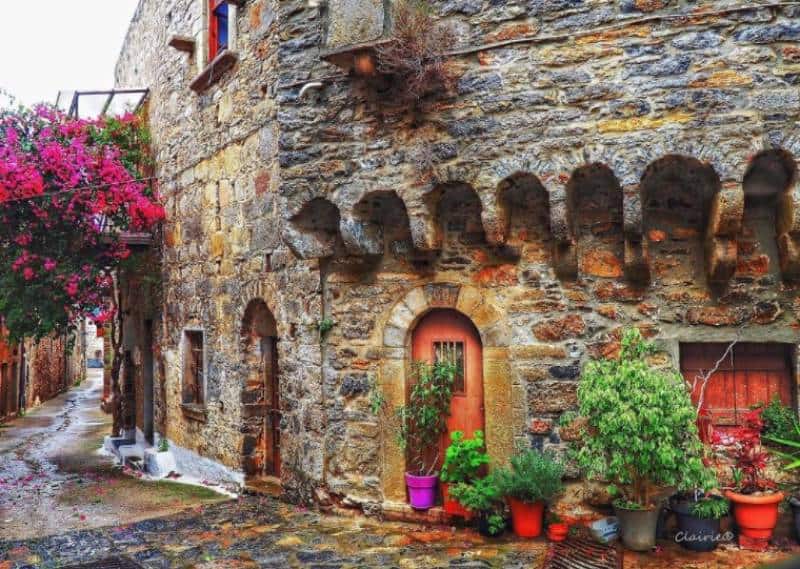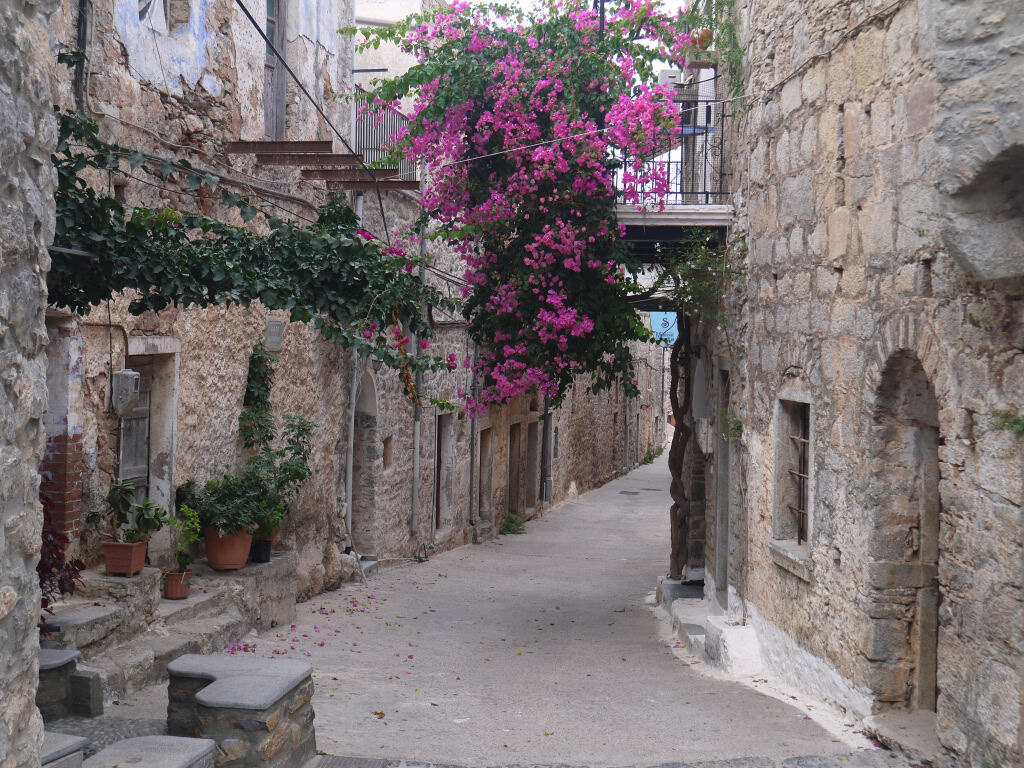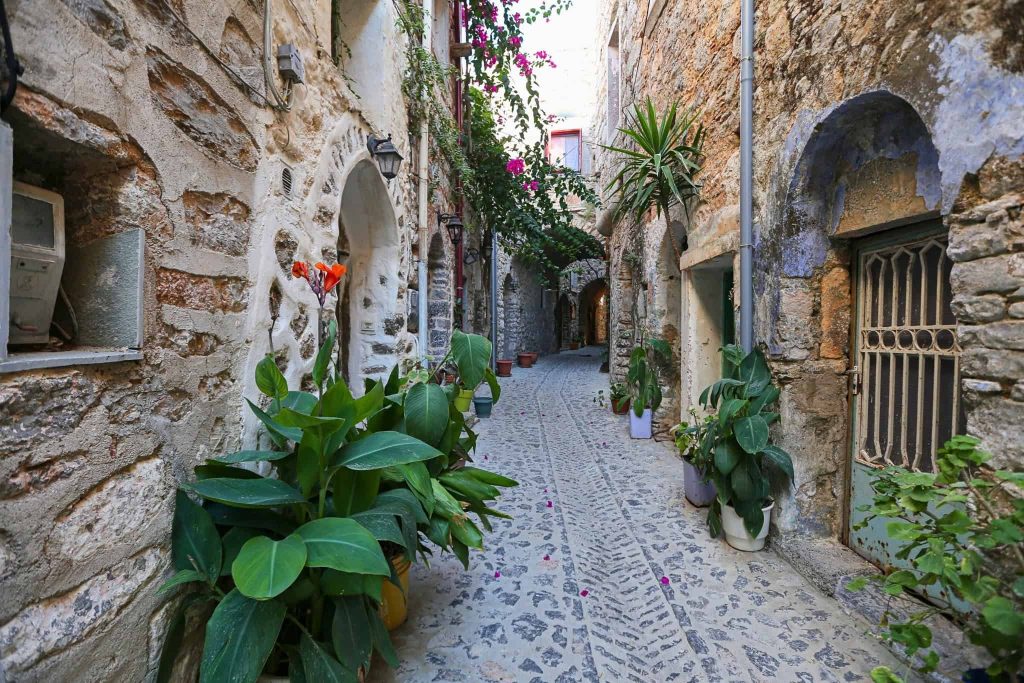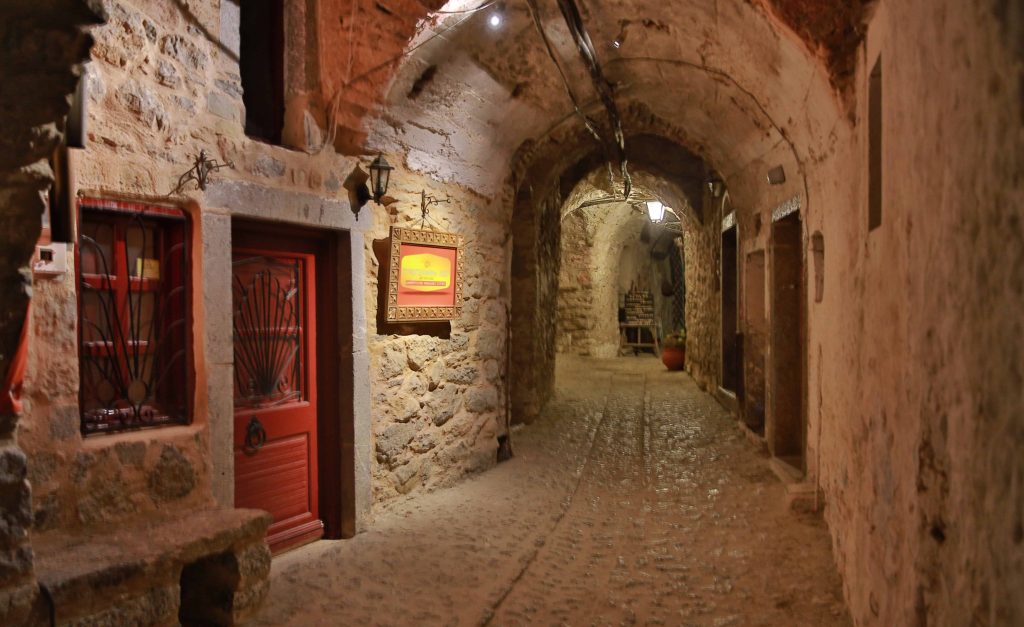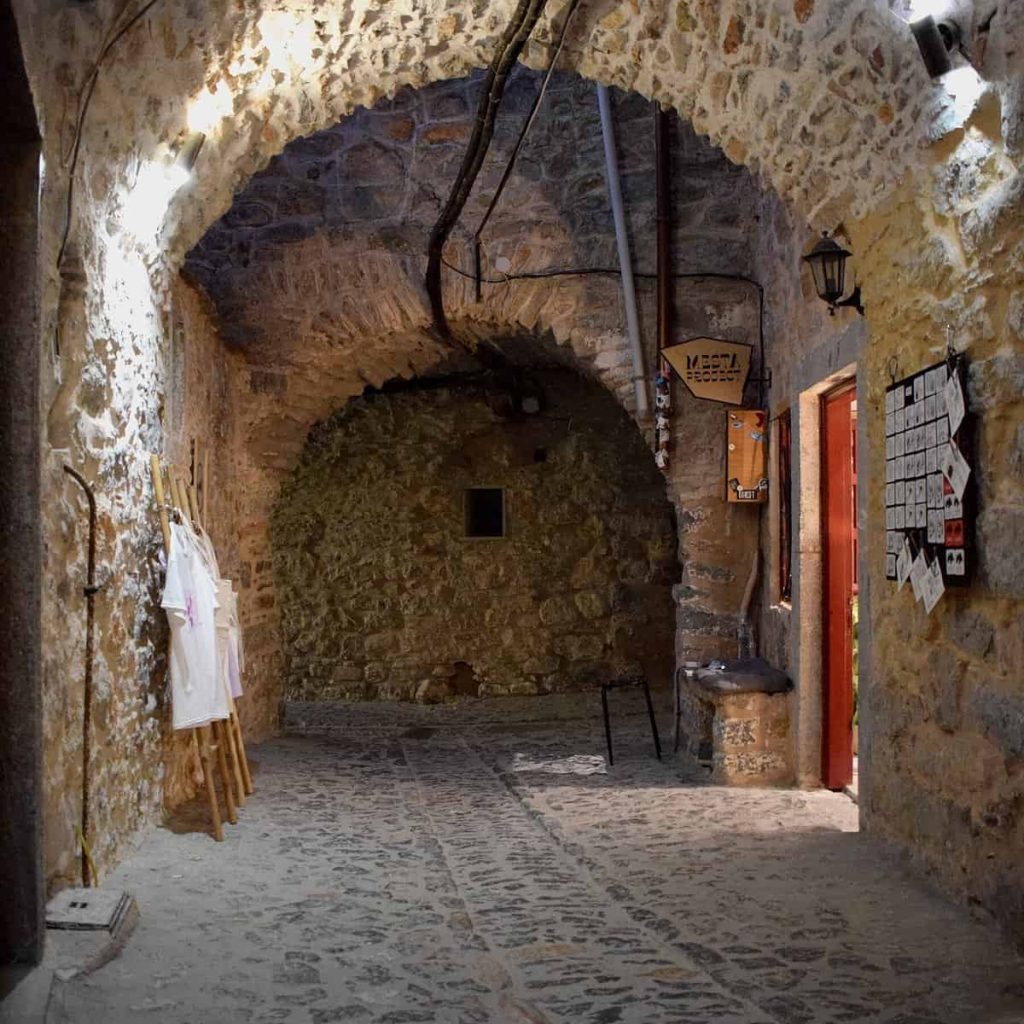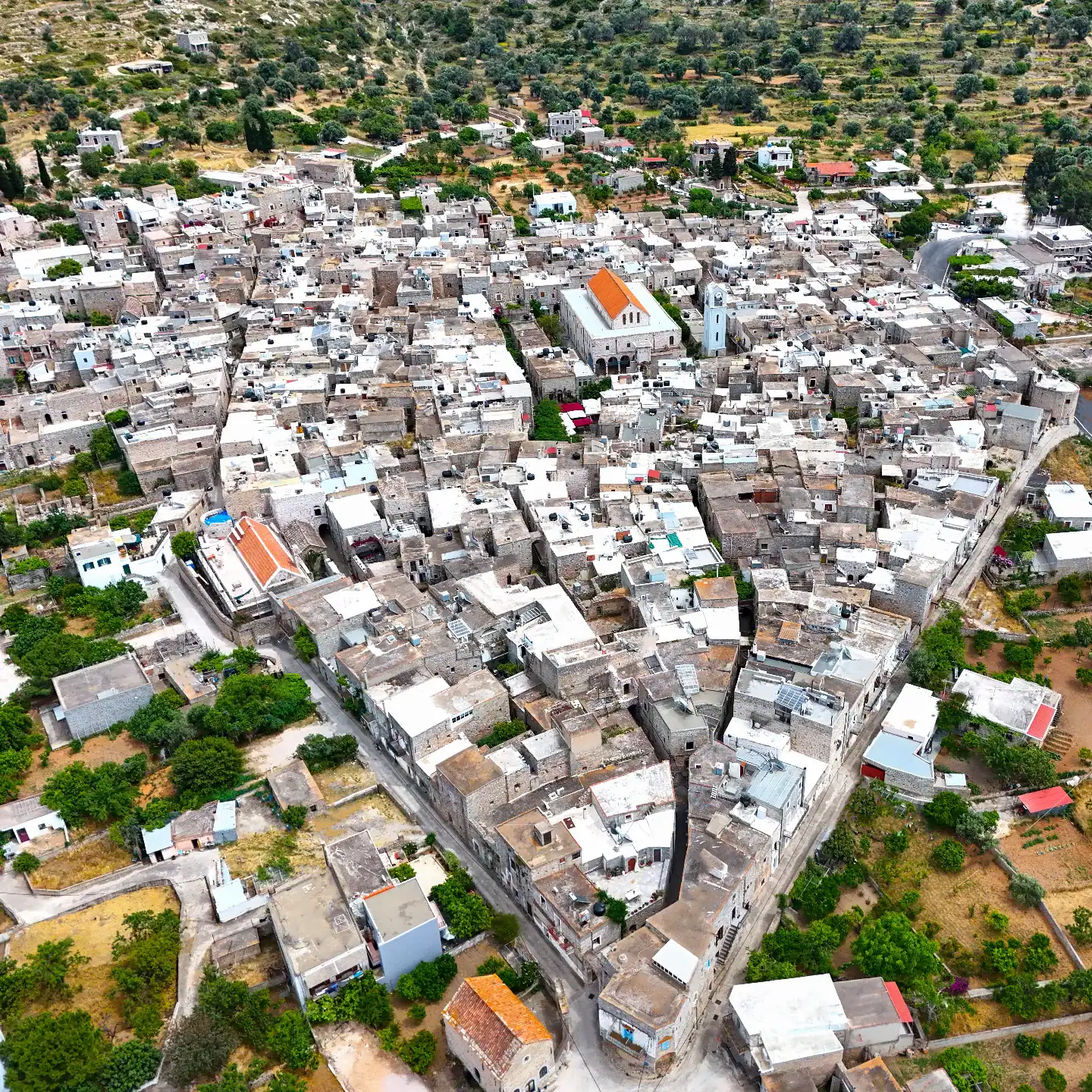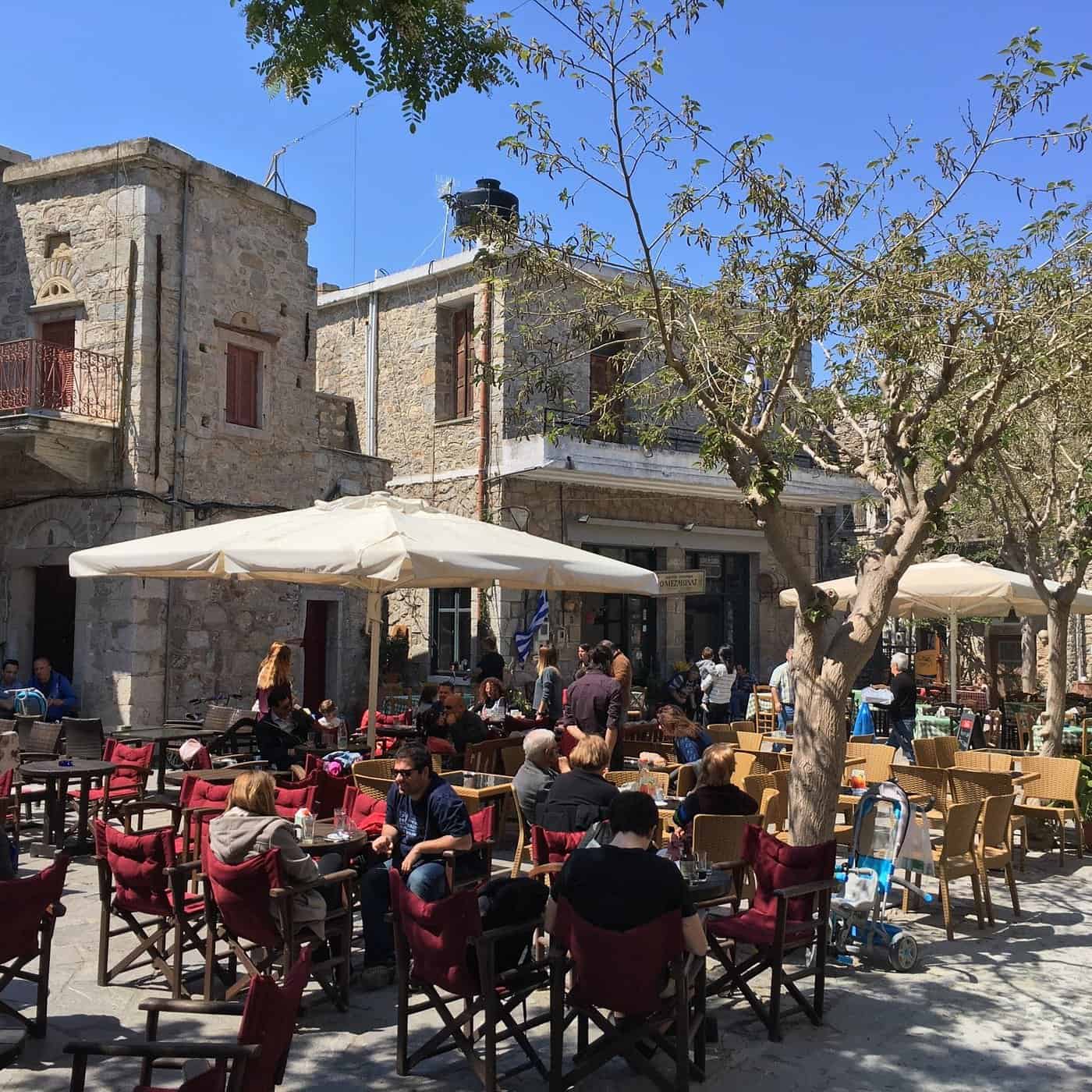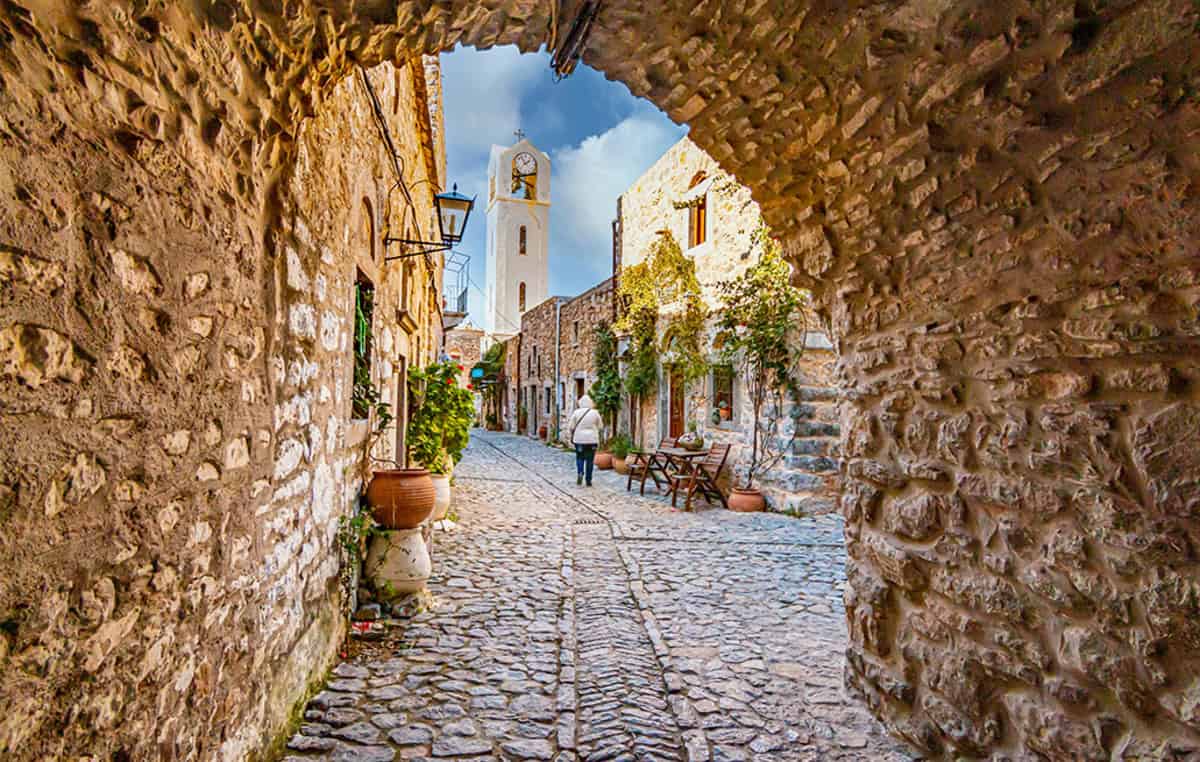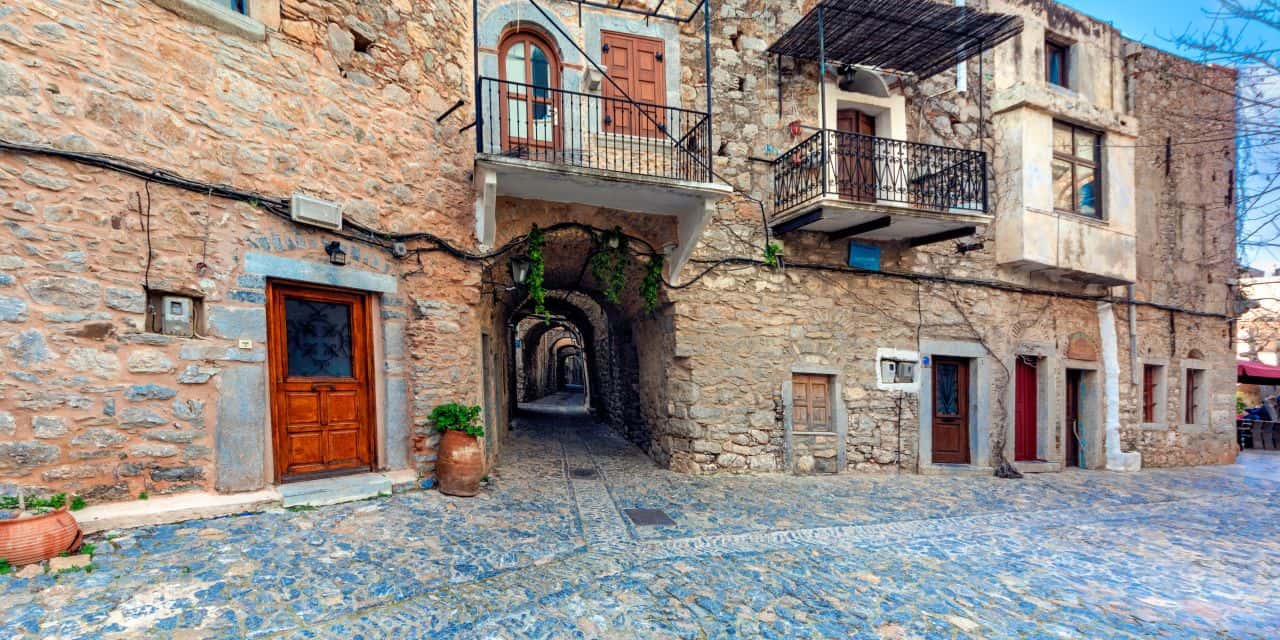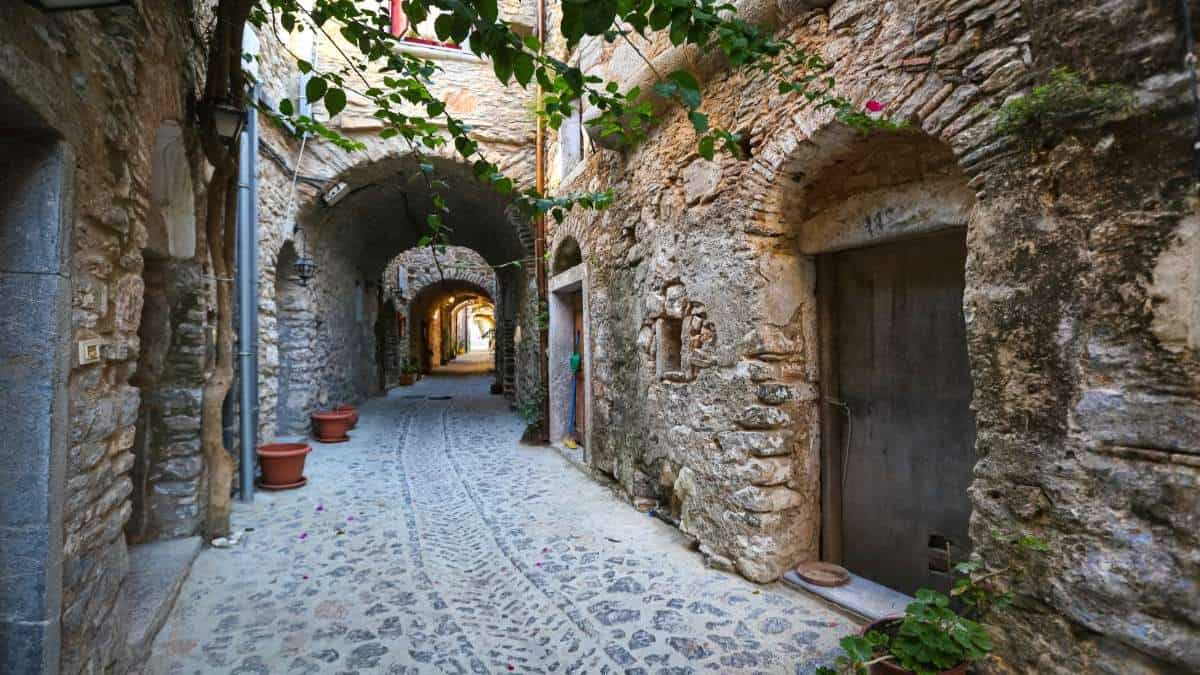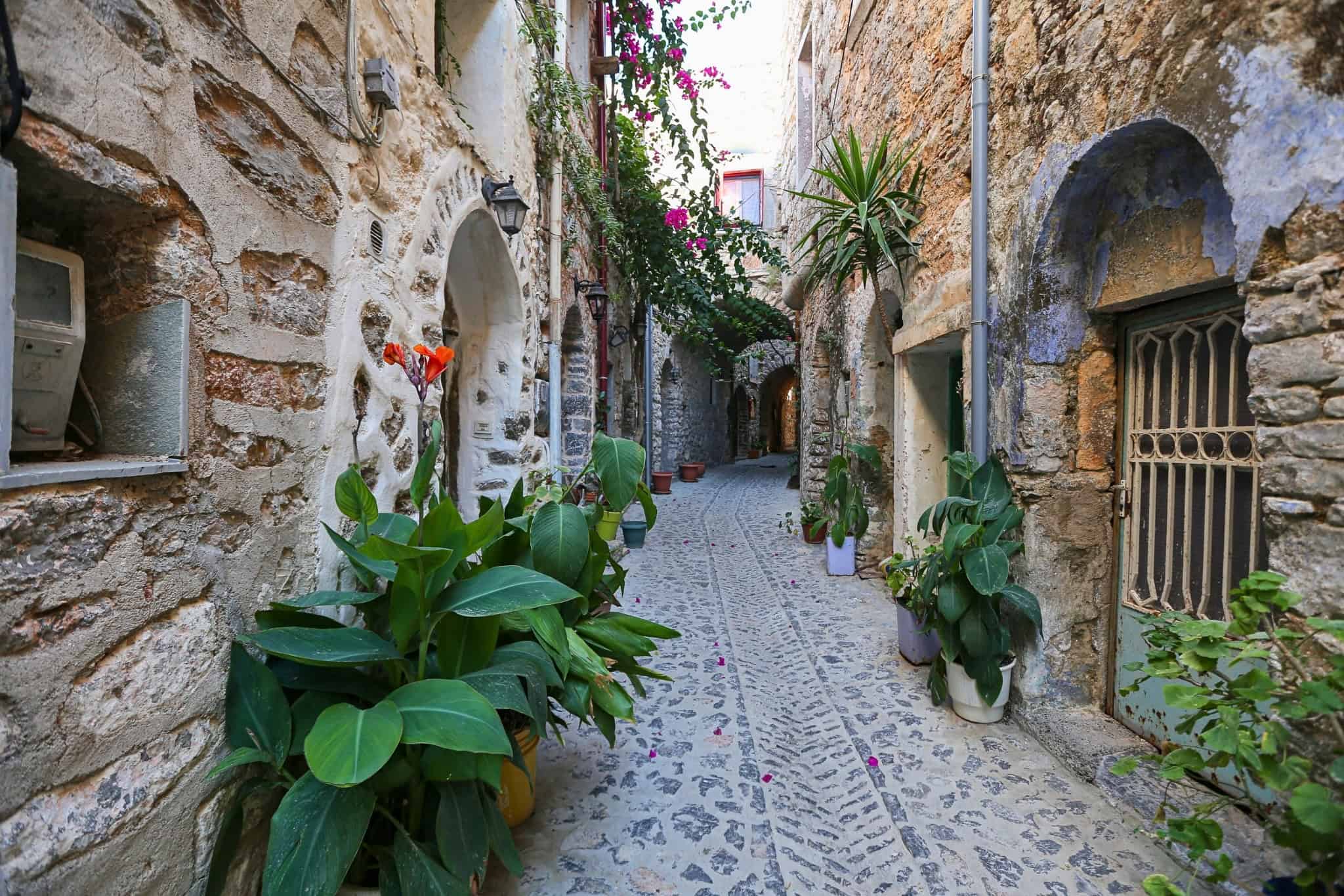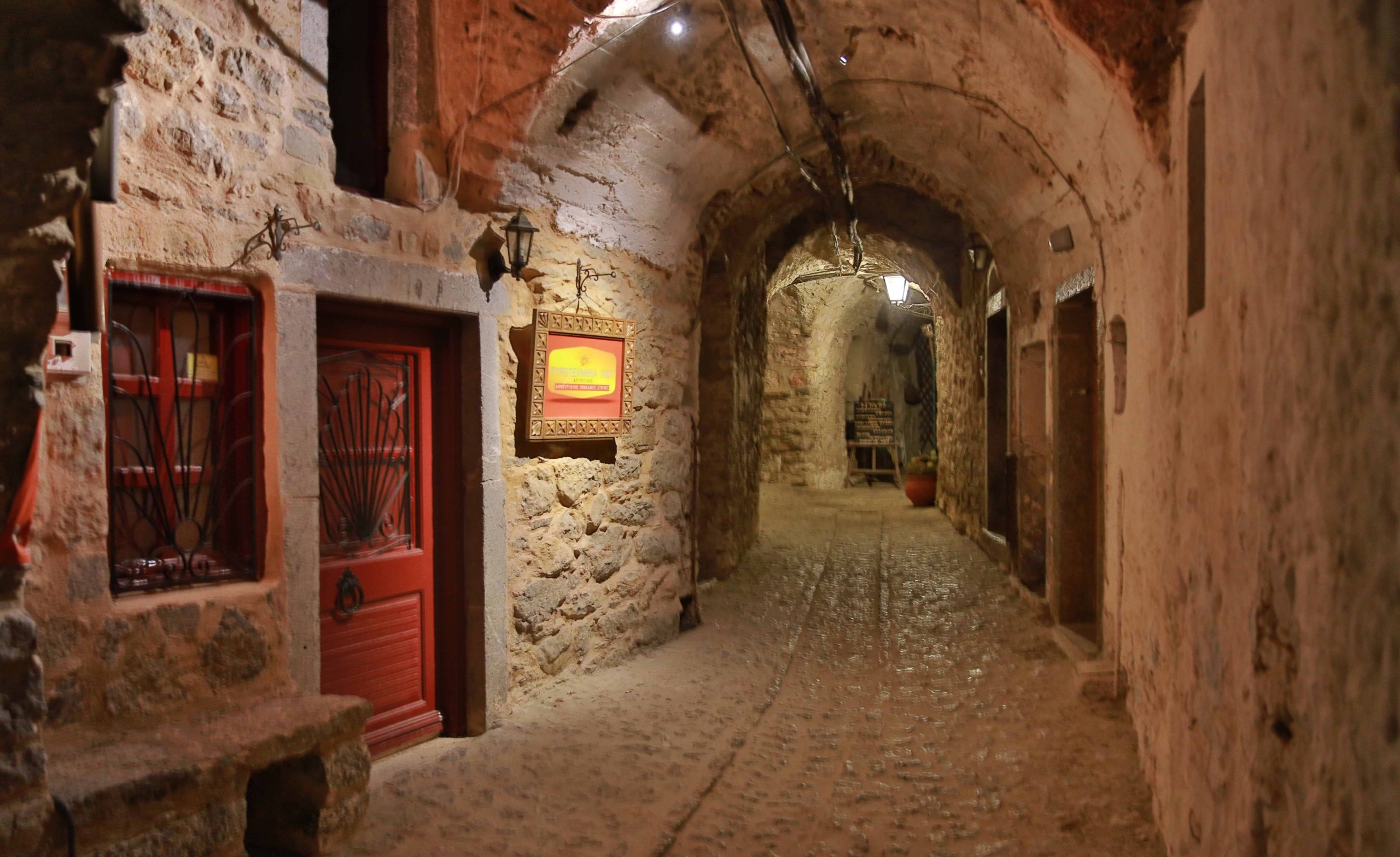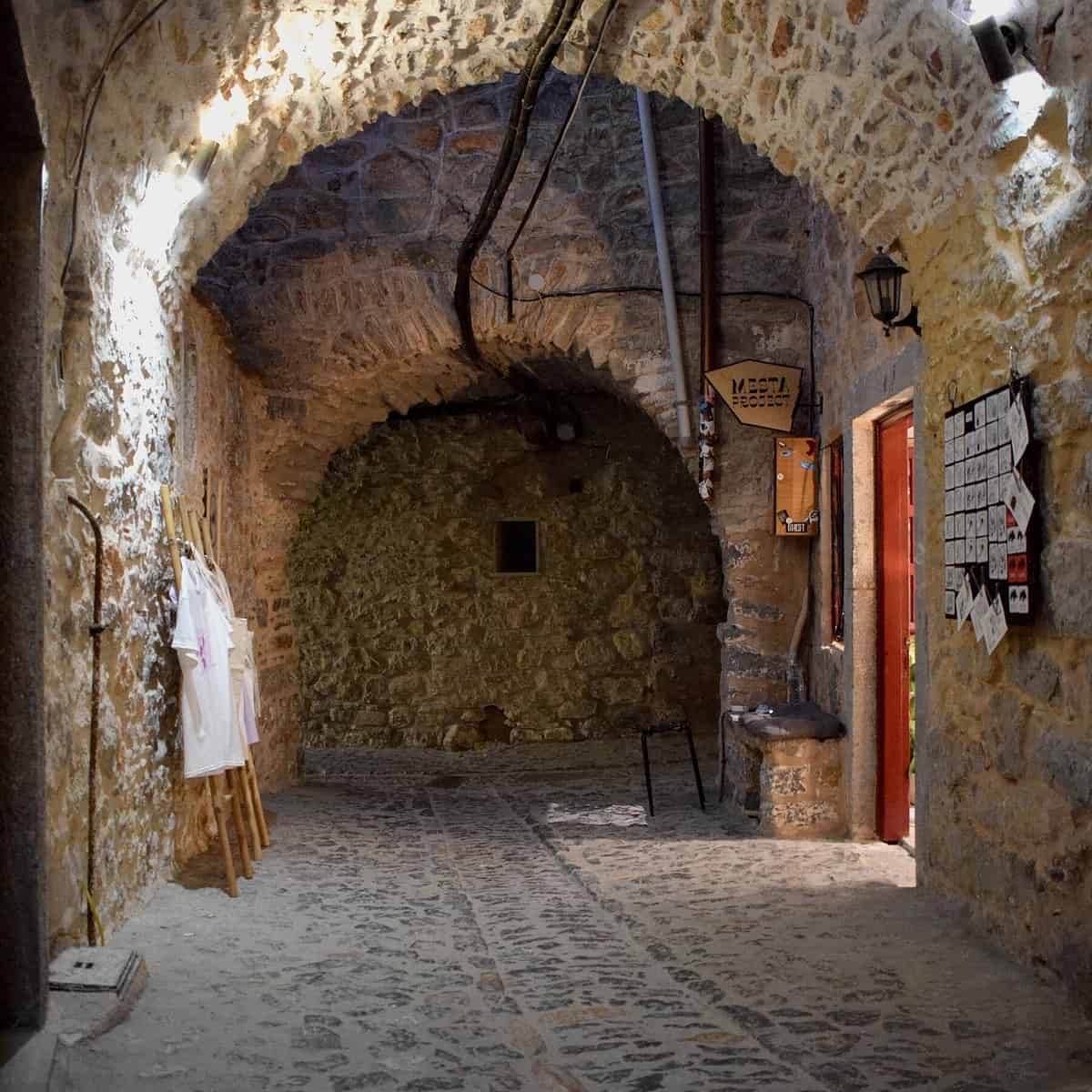

Mesta is one of the best-preserved medieval villages in all of Greece, located in the southwestern part of Chios island, 35 kilometers from the main town. Built during the Byzantine era in the 12th century, the village was designed as a fortress — its stone houses were constructed side by side, forming an unbroken protective wall around the entire settlement. Only two gates lead into the village, and once inside, a labyrinth of narrow cobblestone alleys and vaulted stone archways unfolds before you.
During the Genoese period (1346–1566), the fortifications were reinforced to protect the village — and its precious mastic trees — from pirate raids. The pentagonal street plan was deliberately designed as a maze, making it nearly impossible for invaders to navigate. The outer houses had no windows facing outward, and a central defense tower served as a last refuge during attacks.
Mesta belongs to the famous Mastichochoria — the Mastic Villages of southern Chios — whose centuries-old tradition of cultivating mastic resin has been recognized by UNESCO as Intangible Cultural Heritage of Humanity. Today, the village is known for its unique local wine “Mestousiko” and “souma,” a traditional spirit distilled from figs and grapes.
At the heart of the village stand two remarkable churches: the Palaios Taxiarchis, built in 1794 with an extraordinary hand-carved wooden iconostasis, and the Megalos Taxiarchis, one of the largest churches on the island, built on the site of the original defense tower.
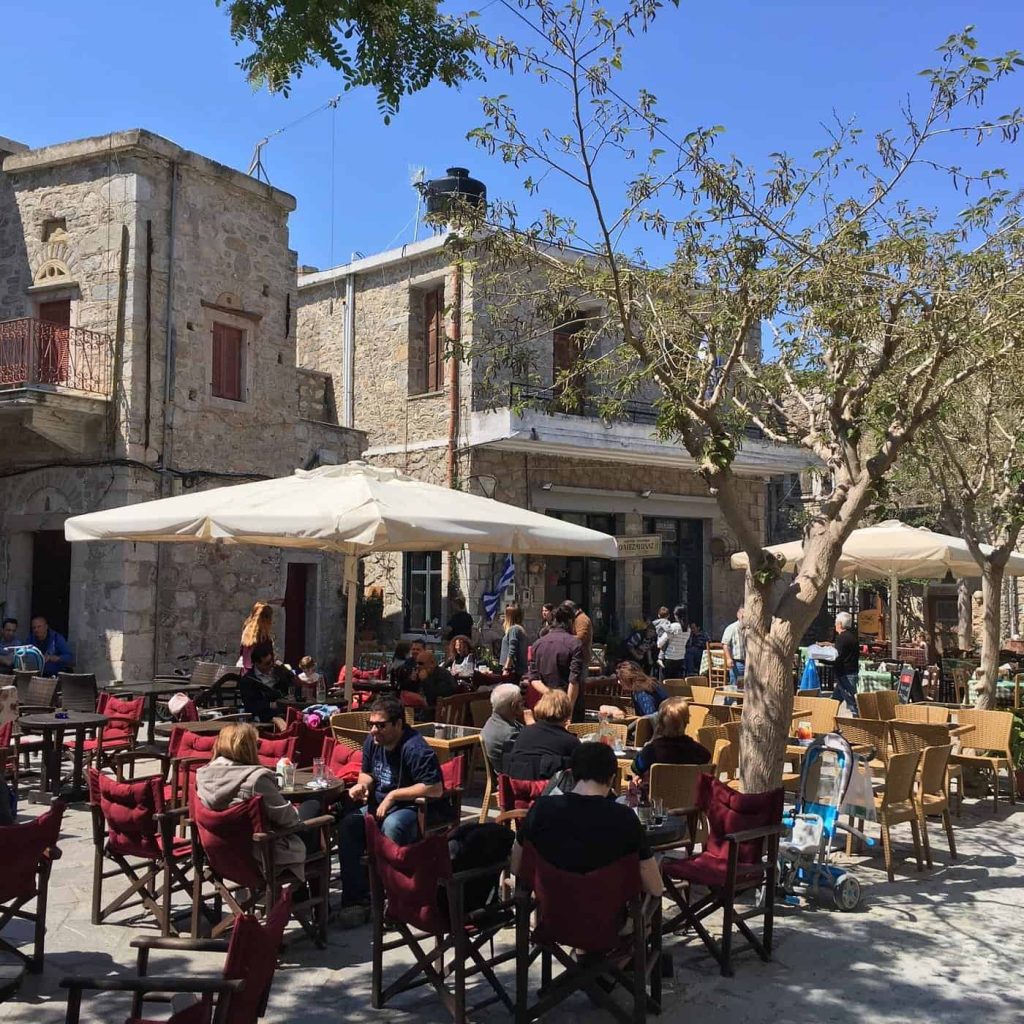
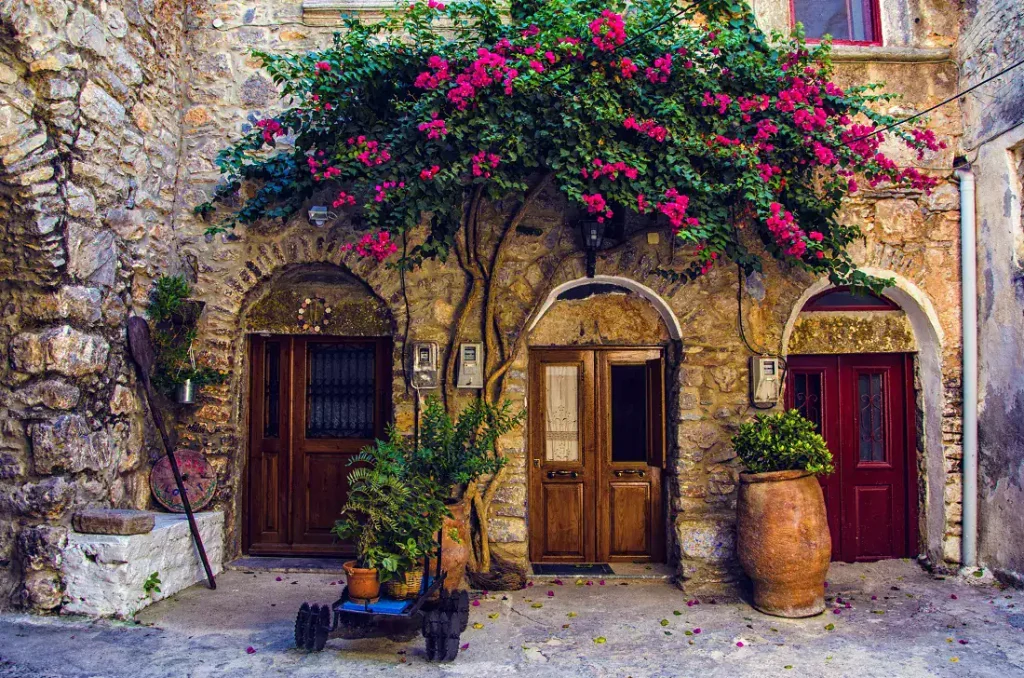
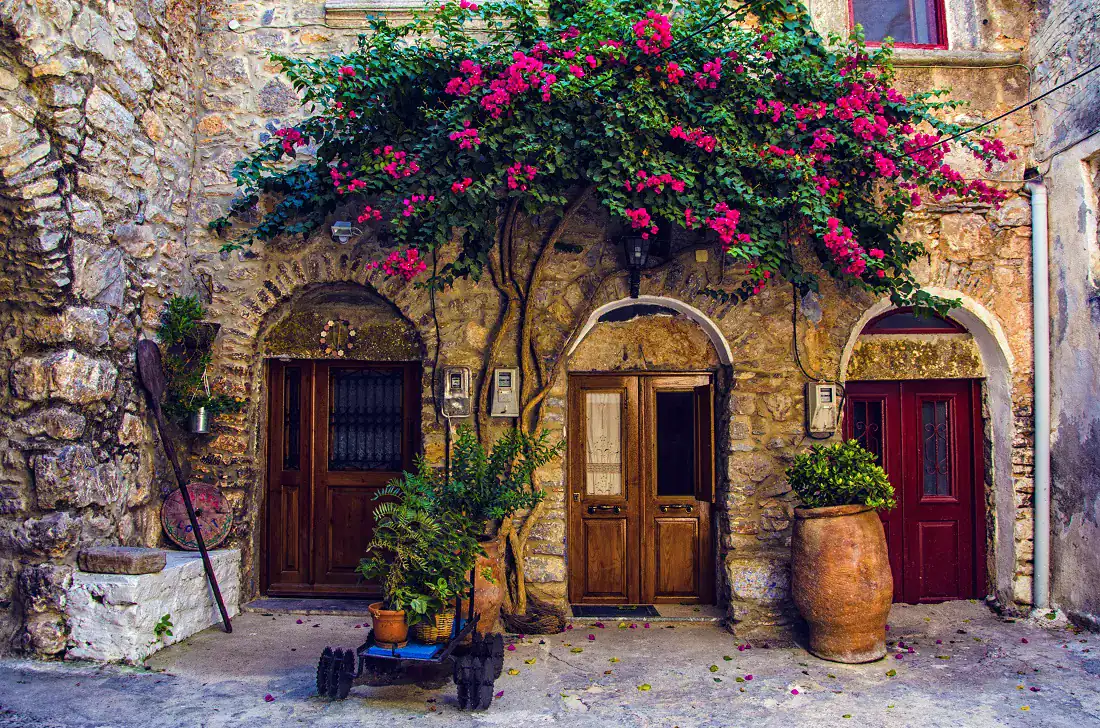
Walking through Mesta today feels like stepping back in time. Bougainvillea climbs over ancient stone walls, cats doze in the shade of medieval archways, and the rhythm of daily life moves at its own unhurried pace. It is a place where centuries of history are not preserved behind glass — they are simply lived in.